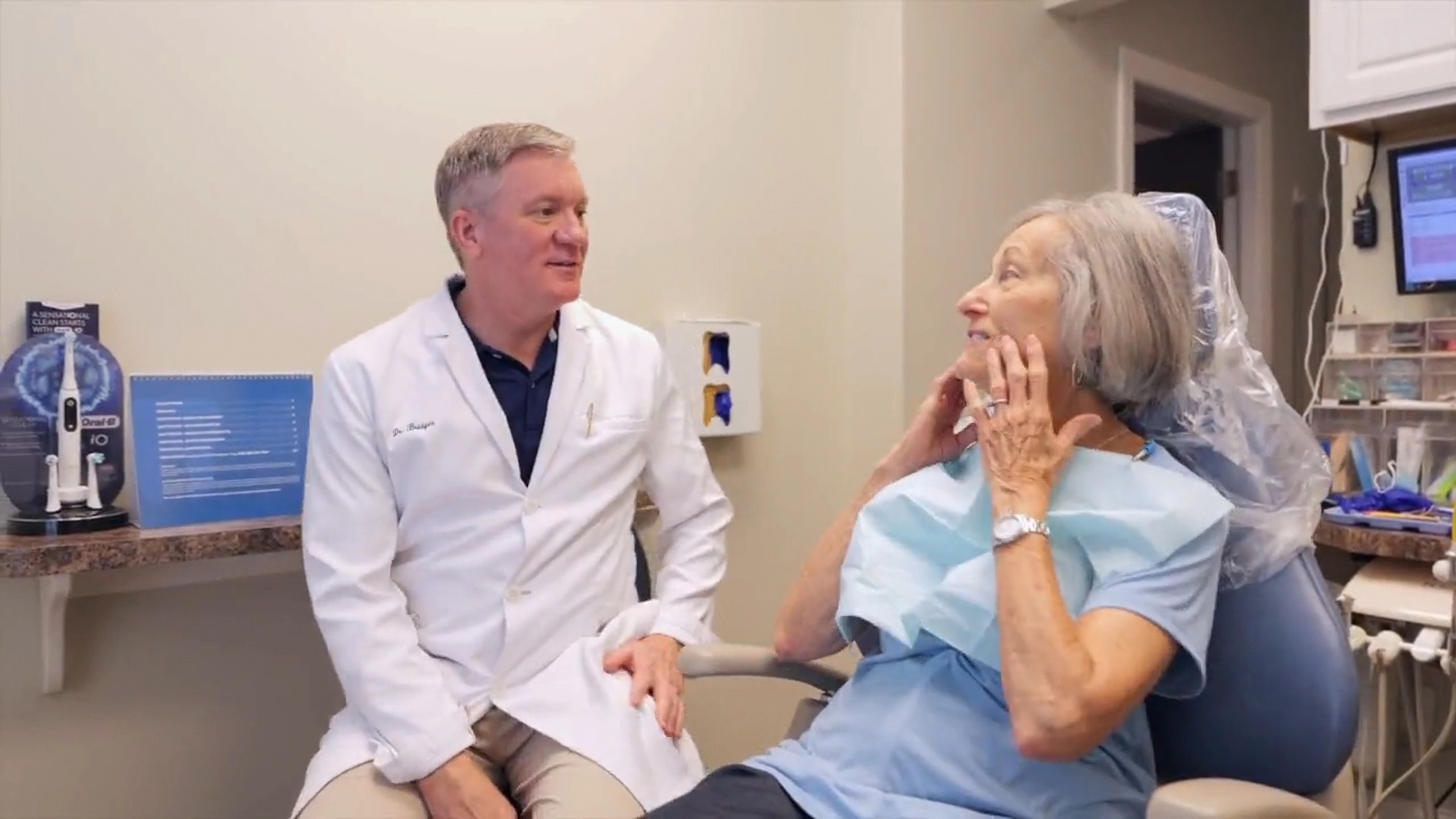
For decades, people with missing teeth had only one option for full-arch replacement: traditional dentures that rest directly on the gums. While these appliances restore basic function, millions of denture wearers struggle with slipping, clicking, sore spots, and the inability to eat their favorite foods. There is a better way.
Implant-supported dentures (also called overdentures) attach to dental implants—small titanium posts surgically placed in the jawbone. This connection transforms the denture experience from one of compromise to one of confidence. For residents of Paducah, Reidland, Lone Oak, and across Western Kentucky, implant-supported dentures offer a life-changing alternative to traditional prosthetics.
This guide explains how implant-supported dentures work, compares them to traditional options, and helps you determine whether this premium tooth replacement solution is right for you. For a complete overview of all denture types, explore our Complete Guide to Dentures and Partials or visit our Dentures and Partials service page.
Table of Contents
Key Takeaways (TL;DR)
- Implant-supported dentures attach to titanium posts in the jawbone. This connection eliminates slipping, clicking, and the need for denture adhesive.
- Overdentures preserve jawbone density. Unlike traditional dentures, implants stimulate bone, preventing the facial collapse associated with long-term denture wear.
- Two to six implants support a full arch. Ball attachments (2-4 implants) offer removable options; bar-supported or fixed dentures (4-6 implants) provide maximum stability.
- Higher upfront cost delivers long-term value. Implant-supported dentures cost $7,000-$20,000 per arch but last 15-20+ years versus 5-10 years for traditional dentures.
What Are Implant-Supported Dentures?
Implant-supported dentures are removable or fixed prosthetic arches that attach to dental implants—titanium posts surgically placed into the jawbone. Through a process called osseointegration, the implants fuse with living bone tissue, creating a stable foundation that mimics the function of natural tooth roots.
Unlike traditional dentures, which rest entirely on gum tissue and rely on suction (upper arch) or muscle control (lower arch) for retention, implant-supported dentures lock into place. Patients can eat, speak, and laugh without worrying about their dentures slipping or clicking. For many, this security is life-changing.
According to the American Dental Association (ADA), as of 2025, implant-supported overdentures have become the standard of care for edentulous patients (those with no natural teeth) who have adequate bone volume and overall health. The National Institutes of Health (NIH) notes that patient satisfaction scores for implant-supported dentures consistently exceed 90%, compared to approximately 60% for traditional dentures.
Types of Implant-Supported Dentures
Several configurations of implant-supported dentures exist, each suited to different clinical situations, budgets, and patient preferences.
Ball/Stud Attachment Overdentures (2-4 Implants)
This is the most common and affordable implant-supported option. Two to four implants are placed in the jaw, and the denture snaps onto ball-shaped attachments embedded in the denture base. The denture is removable for cleaning and sleeping. Patients typically need a reline or replacement of the attachment housings every 2-3 years as the nylon inserts wear down.
Bar-Supported Overdentures (4-6 Implants)
A custom-milled titanium bar connects multiple implants (typically 4-6), and the denture clips onto the bar using retention clips. This configuration distributes forces more evenly and provides superior stability compared to ball attachments. Bar-supported dentures are ideal for patients with sufficient bone volume who want the highest level of stability in a removable prosthesis.
Fixed (Non-Removable) Implant Dentures (4-8 Implants)
Also called hybrid dentures, fixed-detachable prosthetics, or All-on-4/All-on-6, these appliances are screwed into implants and can only be removed by a dentist. They feel most like natural teeth, never move during function, and typically use 4-8 implants per arch. Fixed dentures are the most expensive option but offer the closest approximation to natural dentition.
Implant-Supported vs. Traditional Dentures: A Complete Comparison
Understanding the differences between implant-supported and traditional dentures helps patients make informed decisions based on their priorities, budget, and clinical needs.
Clinical observations from practices serving Paducah and Western Kentucky show that patients who switch from traditional to implant-supported dentures most frequently report dramatic improvements in quality of life, including the ability to eat previously forbidden foods and the confidence to laugh and speak without covering their mouths.
Why Bone Preservation Matters: The Hidden Cost of Traditional Dentures
One of the most overlooked consequences of tooth loss is bone resorption—the gradual loss of jawbone density that occurs when teeth are missing. Natural tooth roots stimulate the bone through chewing forces. When teeth are removed, this stimulation stops, and the body begins to resorb (break down) bone tissue.
According to NIH-supported research, patients with traditional dentures lose approximately 0.5-1mm of bone height annually in the first 5-10 years after tooth loss. Over decades, this leads to:
- Facial collapse (sunken appearance around the mouth)
- Wrinkling around the lips and chin
- Loss of vertical dimension (the lower face shortens)
- Poor denture fit requiring frequent relines or replacement
- Difficulty wearing dentures on the lower arch due to minimal bone
Dental implants, however, mimic natural tooth roots. The osseointegration process stimulates bone maintenance, preserving density and preventing the facial changes associated with long-term denture wear. A 2023 systematic review in the Journal of Oral Implantology (PubMed-indexed) found that implant-supported prosthetics maintain 95% of baseline bone density over 10 years, compared to 60-70% for traditional dentures.
Who Is a Candidate for Implant-Supported Dentures?
Not every patient is automatically eligible for dental implants. Several factors determine candidacy.
Ideal Candidates
- Patients missing all or most teeth in an arch
- Adequate bone volume to support implants (or willing to undergo bone grafting)
- Healthy gums free from active periodontal disease
- Non-smokers or willing to quit during the healing period
- No uncontrolled systemic conditions (diabetes, autoimmune disorders, etc.)
- Frustrated with loose, uncomfortable traditional dentures
Relative Contraindications (May Still Be Candidates)
- Heavy smokers (increased risk of implant failure)
- Patients with uncontrolled diabetes (HbA1c > 7.0)
- Those taking bisphosphonate medications (osteoporosis drugs)
- Patients who have undergone head/neck radiation
For patients with insufficient bone volume, bone grafting procedures can rebuild lost bone, making implant placement possible. These procedures add 3-9 months to the treatment timeline but significantly expand candidacy.
At Smile Station Dental Care in Paducah, KY, Dr. Scott Bridges evaluates each patient individually, reviewing medical history, performing clinical examination, and using advanced imaging (CBCT) to assess bone volume and quality before making implant recommendations.
The Implant-Supported Denture Procedure: What to Expect
The journey from consultation to final implant-supported denture typically spans 6-12 months, depending on bone quality, healing, and the specific technique used.
Implant-Supported Denture Timeline
Step 1: Consultation and CBCT Imaging. Dr. Bridges evaluates bone volume, gum health, and medical history. Cone beam CT (CBCT) imaging provides 3D views of the jawbone, allowing precise implant planning.
Step 2: Implant Placement Surgery. Under local anesthesia (often with sedation options for anxious patients), implants are surgically placed into the jawbone. Most patients report less discomfort than expected, managed with over-the-counter pain medication.
Step 3: Osseointegration Healing Period. Over 3-6 months, bone grows around the implant surface, locking it in place. Patients wear their existing denture (relined for comfort) during this period.
Step 4: Attachment Placement. Once implants are fully integrated, small connectors (abutments) are placed on top of each implant. These protrude through the gum tissue and will connect to the denture.
Step 5: Denture Fabrication and Delivery. Impressions capture the implant positions, and a custom denture is fabricated with housings that snap onto the attachments. The final denture is fitted and adjusted for comfort.
For patients undergoing the All-on-4 or immediate loading technique, a temporary fixed denture may be placed on the same day as surgery, eliminating the toothless period entirely.
Cost and Investment: Understanding the Value of Implant-Supported Dentures
The upfront cost of implant-supported dentures is significantly higher than traditional dentures—typically $7,000-$20,000 per arch depending on the number of implants, type of attachment system, and materials used. However, when viewed as a long-term investment, the value proposition becomes clearer.
Most dental insurance plans provide limited coverage for implant-supported dentures, typically covering 50-80% of the denture portion (similar to traditional dentures) but little to none of the implant surgery. CareCredit, LendingClub, and in-house payment plans can make the investment manageable with monthly payments.
For patients in Paducah, Benton, Calvert City, and Metropolis, IL, the long-term value of implant-supported dentures often justifies the higher upfront cost—particularly for those who have struggled with traditional dentures for years.
Frequently Asked Questions About Implant-Supported Dentures
Are implant-supported dentures better than regular dentures?
For eligible patients, yes. Implant-supported dentures offer superior stability (no slipping or clicking), preserve jawbone density, restore 70-90% of natural chewing efficiency (compared to 20-30% for traditional dentures), and eliminate the need for denture adhesive. The primary drawback is higher upfront cost.
How many implants are needed for implant-supported dentures?
The number ranges from 2 to 8 per arch. Two to four implants support ball attachment overdentures (removable). Four to six implants support bar-supported overdentures. Four to eight implants support fixed/hybrid dentures (non-removable). More implants generally mean better stability and force distribution but higher cost.
Can I get implant-supported dentures if I’ve worn dentures for years?
Yes, but long-term denture wear causes bone resorption, which may reduce available bone volume for implants. CBCT imaging will determine if bone grafting is needed before implant placement. Many long-term denture wearers remain excellent candidates after grafting.
Do implant-supported dentures look natural?
Yes. The denture portion is identical in appearance to a high-quality traditional denture, with natural-looking gum-colored acrylic and lifelike teeth. The implants are completely hidden beneath the gum tissue and inside the jawbone. No one will know you have implants unless you tell them.
How do you clean implant-supported dentures?
Removable implant-supported dentures are cleaned exactly like traditional dentures—removed nightly, brushed with a soft denture brush, and soaked in cleaning solution. Additionally, the implant attachments under the denture must be cleaned with special brushes or floss to prevent inflammation.
What is the success rate of implant-supported dentures?
According to a 2022 systematic review in the Journal of Prosthetic Dentistry (PubMed-indexed), implant-supported overdentures have a 5-year success rate of 95-98% and a 10-year success rate of 90-95%. Success depends on proper patient selection, surgical technique, and maintenance.
Can implant-supported dentures be done on both upper and lower arches?
Yes. Many patients receive implant-supported dentures on both arches simultaneously or sequentially. The upper arch often requires fewer implants (typically 4) because the palate provides additional support. The lower arch typically requires 2-4 implants due to less available bone and greater movement forces.
Does insurance cover implant-supported dentures?
Coverage varies significantly. Most plans cover the denture portion (similar to traditional dentures) but provide limited or no coverage for implant surgery. Some plans offer “implant allowance” benefits of $1,000-$3,000 per arch. Patients should request a pre-treatment estimate from their insurance provider.
Community Overview — Advanced Tooth Replacement in Paducah and Western Kentucky
Smile Station Dental Care, located at 5504 Reidland Rd in Paducah, KY, offers implant-supported denture services to patients throughout McCracken County and the surrounding region, including:
- Reidland (immediate area)
- Lone Oak (5-10 minutes)
- Hendron (10-15 minutes)
- Paducah (15 minutes)
- West Paducah (15-20 minutes)
- Ledbetter (15-20 minutes)
- Benton (20-25 minutes)
- Calvert City (25-30 minutes)
- Metropolis, IL (25-30 minutes)
- Brookport, IL (25-30 minutes)
Patients from Mayfield (30-35 minutes), Smithland (30 minutes), and Hardin (40 minutes) also regularly travel to Smile Station Dental Care for implant-supported denture consultations and treatment, drawn by the practice’s comprehensive restorative services and commitment to patient comfort.
About the Author — Dr. Scott Bridges, DMD
Dr. Scott Bridges, DMD, is the lead dentist and owner of Smile Station Dental Care in Paducah, Kentucky. With advanced training in implant dentistry and prosthetic reconstruction, Dr. Bridges has placed and restored hundreds of dental implants, helping patients throughout Western Kentucky and Southern Illinois transition from uncomfortable traditional dentures to stable, life-changing implant-supported prosthetics.
Dr. Bridges takes a conservative, patient-first approach to implant treatment, carefully evaluating each candidate’s bone volume, medical history, and goals before recommending a personalized treatment plan. He believes that implant-supported dentures should be accessible to eligible patients and works with multiple financing partners to make treatment affordable.
Dr. Bridges maintains active memberships in the American Dental Association (ADA), Kentucky Dental Association (KDA), and Academy of Osseointegration, completing continuing education annually to stay current with the latest implant techniques and technologies.
Is It Time to Upgrade Your Denture Experience?
If you’re tired of loose dentures, messy adhesives, and avoiding your favorite foods, implant-supported dentures may be the solution you’ve been waiting for. While the upfront investment is higher than traditional options, the improvement in quality of life—and the long-term bone preservation benefits—make overdentures one of the most valuable investments in dental health.
The first step is a comprehensive consultation with Dr. Bridges. He will evaluate your bone volume, discuss your goals, explain all options with transparent pricing, and help you determine whether you’re a candidate for implant-supported dentures.
For more information, explore our Complete Guide to Dentures and Partials, visit our Dentures and Partials service page, or read our Complete Guide to Family and Cosmetic Dentistry.
Call Smile Station Dental Care today at (270) 408-1234 to schedule your implant consultation. Serving patients from Paducah, Reidland, Lone Oak, Benton, Calvert City, Metropolis, IL, and all surrounding communities.