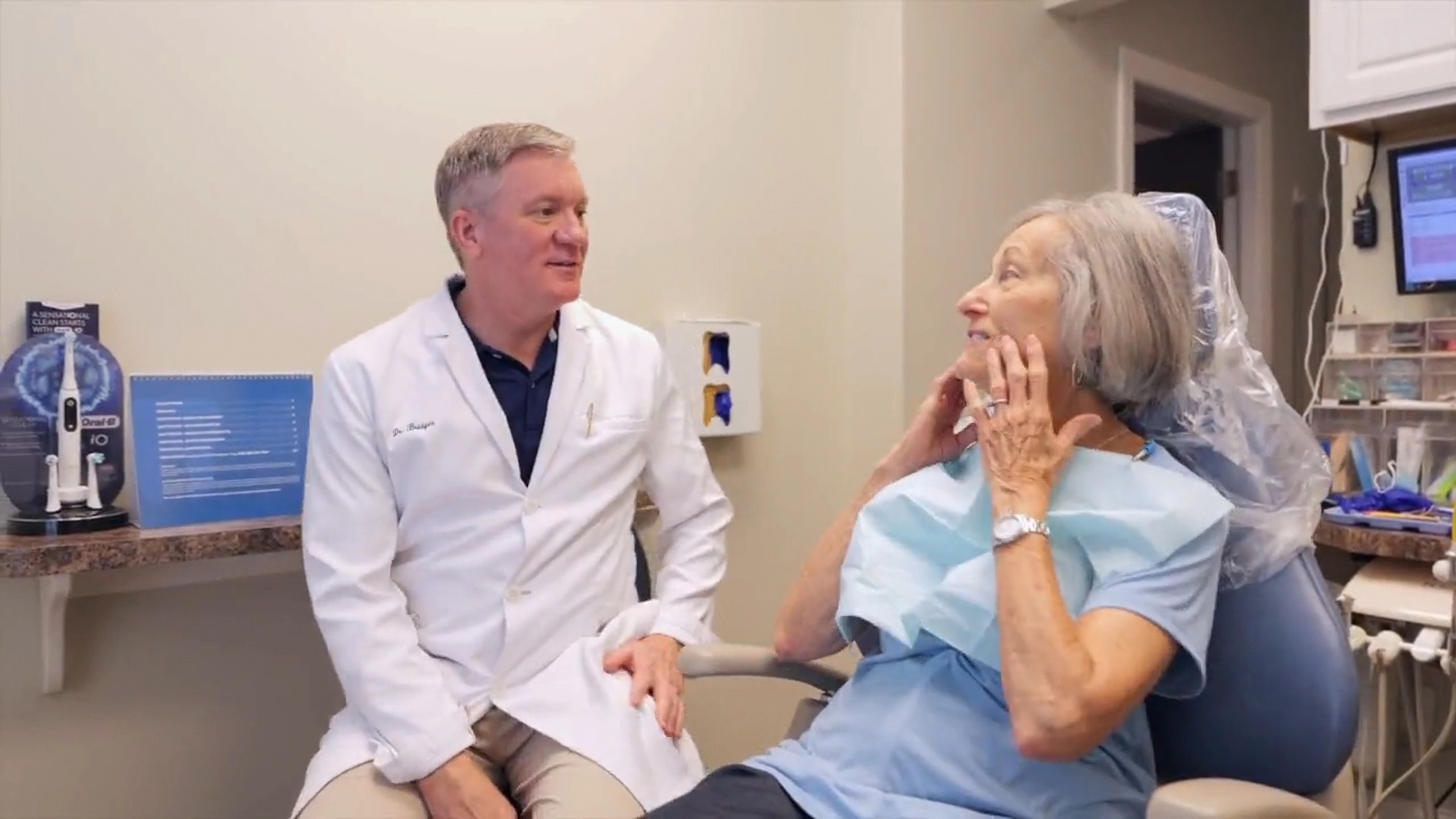
Your dentures have served you well for years. They’ve helped you eat, speak, and smile with confidence. But nothing lasts forever—and dentures are no exception. Over time, normal wear, age-related changes to your jawbone, and everyday use take their toll.
The question isn’t whether your dentures will eventually need replacement—it’s whether you know the warning signs. For residents of Paducah, Reidland, Lone Oak, and across Western Kentucky, recognizing when to reline, repair, or replace dentures can prevent discomfort, oral health problems, and even serious medical conditions.
This guide explains the difference between relining and replacement, lists the key warning signs of failing dentures, and helps you understand when to see your dentist. For a complete overview of denture types and care, explore our Complete Guide to Dentures and Partials or read our Denture Care Guide.
Table of Contents
Key Takeaways (TL;DR)
- Reline adds material to improve fit; replacement creates a new denture. Relines cost $200-$500 and take 1-2 hours. Replacements cost $1,500-$4,000 and take 3-5 appointments.
- Warning signs include clicking, sore spots, difficulty chewing, and adhesive overuse. If you use adhesive daily for stability, your dentures likely need relining or replacement.
- Bone resorption (0.5-1mm annually) causes progressive looseness. Even well-made dentures become loose over time as the jawbone changes shape.
- Most dentures need replacement every 5-10 years. Premium dentures last longer (8-12 years) than economy dentures (3-5 years).
Denture Reline vs. Replacement: What’s the Difference?
Before discussing warning signs, it’s essential to understand the two main ways dentists address failing dentures: relining and replacement.
✅ Denture Reline
A reline adds new acrylic material to the inner (tissue) surface of your existing denture to improve fit. The outer surfaces and teeth remain unchanged.
- Cost: $200-$500 (hard reline); $300-$600 (soft reline)
- Time: 1-2 hours (same-day or next-day service)
- Appointments: 1-2 visits
- Lifespan after reline: 1-3 years before another reline or replacement
- Best for: Mild to moderate looseness from bone resorption
🔄 Denture Replacement
Replacement means fabricating an entirely new denture. Old dentures are discarded, and a new appliance is made from new impressions.
- Cost: $1,500-$4,000 per arch
- Time: 3-5 weeks from impressions to delivery
- Appointments: 3-5 visits (impressions, bite registration, try-in, delivery)
- Lifespan of new denture: 5-12 years depending on quality
- Best for: Severe looseness, worn/broken teeth, dentures >7-10 years old
10 Warning Signs Your Dentures Need Attention
If you experience any of these signs, schedule a dental examination. Early intervention (often a simple reline) can prevent more serious problems requiring complete replacement.
Understanding Bone Resorption: Why Dentures Become Loose
Even the most perfectly fitting denture will eventually become loose. The reason is bone resorption—the natural, ongoing loss of jawbone density that occurs when teeth are missing.
According to NIH-supported research, patients without natural teeth lose approximately 0.5-1mm of bone height annually in the first 5-10 years after tooth loss. This doesn’t sound like much, but over 5 years, that’s 2.5-5mm of bone loss—enough to make a once-perfect denture noticeably loose.
Bone resorption affects different areas at different rates:
- Lower anterior (front of lower jaw): Fastest resorption rate—up to 1.5mm/year
- Upper posterior (back of upper jaw): Moderate resorption—0.5-1mm/year
- Upper anterior (front of upper jaw): Slowest resorption—0.3-0.5mm/year
This explains why lower dentures become loose faster than upper dentures (upper dentures have suction from the palate, while lower dentures rely entirely on fit).
For patients in Paducah and Western Kentucky who have worn dentures for many years without professional follow-up, significant bone loss is common. This is why regular dental checkups (even without natural teeth) are essential—dentists can monitor bone loss and recommend timely relines or replacements.
Physical Damage: Cracks, Chips, and Worn Teeth
Beyond fit issues, physical damage to the denture itself may require repair or replacement. Here’s how to assess different types of damage.
Cracked or Fractured Base
Small hairline cracks can sometimes be repaired, but larger fractures or cracks through the midline often require replacement. Never wear a cracked denture—it can break completely while in your mouth, creating sharp edges that cut gums.
Worn or Flat Teeth
Acrylic denture teeth wear down over 5-10 years of normal use. Signs of worn teeth include:
- Teeth appear flat or smooth instead of having natural contours
- Difficulty chewing (food doesn’t break down effectively)
- Changes in your bite (teeth don’t meet properly)
- Jaw discomfort or TMJ symptoms from improper bite alignment
Worn teeth cannot be repaired—the entire denture must be replaced. Some dentists can “reline” the teeth (add acrylic to rebuild chewing surfaces), but this is a temporary fix at best.
Broken or Missing Clasps (Partial Dentures)
Metal or flexible clasps that attach partial dentures to natural teeth can break or fatigue over time. A broken clasp:
- Reduces retention, allowing the partial to move or fall out
- Can damage adjacent natural teeth (sharp broken edges)
- May allow the partial to trap food and bacteria around anchor teeth
Clasp repair is possible but depends on the material and extent of damage. Flexible partials (Valplast) cannot be repaired; they must be replaced entirely.
When a Reline Is the Right Solution
A denture reline is often the ideal solution when the denture itself is still in good condition but no longer fits properly due to bone resorption.
Hard Reline (Standard)
- New acrylic material added to inner surface; cures to a hard finish
- Lasts 1-3 years (or longer with good bone stability)
- Cost: $200-$500
- Best for: Patients with normal gum tissue and moderate bone loss
Soft Reline (Cushion)
- Soft, pliable material added to inner surface
- Lasts 12-18 months (material hardens over time)
- Cost: $300-$600
- Best for: Patients with thin, sensitive gums; those undergoing radiation/chemotherapy; patients with chronic sore spots
Most dentists recommend starting with a hard reline unless there’s a specific clinical reason for a soft reline. Soft relines require more frequent replacement and cost more over time.
When Replacement Is the Better Option
In many cases, replacement is more cost-effective and provides better long-term results than repeated relines.
Clear Signs Replacement Is Needed
- Denture is 7+ years old (or 5+ years for economy dentures)
- Teeth are visibly worn or flat (reduced chewing efficiency)
- Multiple previous relines (denture base becoming thick and heavy)
- Cracks or fractures in the base (especially through the midline)
- Severe bone loss (denture rocks significantly even after reline attempts)
- Sunken facial appearance (loss of vertical dimension)
- You want to upgrade materials (from economy to premium, or from traditional to implant-supported)
The Replacement Process
- Appointment 1: Preliminary impressions and bite registration
- Appointment 2: Final impressions and tooth shade selection
- Appointment 3: Wax try-in (test the fit and appearance before final fabrication)
- Appointment 4: Denture delivery and initial adjustments
- Appointment 5 (if needed): Follow-up adjustment after 1-2 weeks of wear
For patients in Paducah, Reidland, and Western Kentucky, Smile Station Dental Care coordinates with regional dental laboratories to ensure timely fabrication and optimal fit of replacement dentures.
What to Expect at Your Denture Evaluation Appointment
If you’re experiencing any of the warning signs above, schedule a denture evaluation. Here’s what happens during that appointment.
- Visual examination: Dentist inspects your dentures for cracks, worn teeth, damaged clasps, and overall condition
- Oral examination: Dentist examines gums, palate, and tongue for sore spots, redness, swelling, or signs of fungal infection
- Fit assessment: Dentist checks for rocking, movement during biting, and suction (upper denture)
- Bone evaluation: May include palpation (feeling the bone ridge) or radiographic imaging to assess bone loss
- Recommendation: Based on findings, dentist recommends reline, repair, replacement, or (rarely) no action needed
- Treatment planning: If treatment is needed, dentist provides cost estimate, timeline, and financing options
The evaluation takes approximately 30 minutes and is often covered by dental insurance as a periodic oral examination.
Frequently Asked Questions About Denture Replacement
How often should dentures be replaced?
Economy dentures: 3-5 years. Standard dentures: 5-8 years. Premium dentures: 8-12 years. Implant-supported prosthetics: 10-15+ years. Regular dental checkups help determine when replacement is needed.
Can I wear my old dentures while new ones are being made?
Yes. Your existing dentures can be worn during the fabrication process (3-5 weeks). If they are extremely loose, a temporary reline or denture adhesive may help during this period.
Will my insurance cover denture replacement?
Most dental insurance plans cover replacement dentures every 5-8 years (frequency varies by plan). Coverage is typically 50% after deductible, up to the annual maximum. Check your policy for specific replacement frequency limits.
Is it normal for dentures to become loose after several years?
Yes, completely normal. Bone resorption (0.5-1mm of bone loss annually) inevitably changes the fit of even the best-made dentures. This is not a sign of poor-quality dentures—it’s a natural biological process.
Can I convert my loose dentures to implant-supported instead of replacing them?
Sometimes. If your denture is in good condition, it can sometimes be retrofitted to attach to implants. However, many patients prefer a new denture designed specifically for implant attachment. Your dentist can evaluate your existing denture and advise the best approach.
How much does a denture reline cost without insurance?
Hard reline: $200-$500. Soft reline: $300-$600. Some dental offices offer same-day chairside relines for $150-$300 (using in-office processing). Prices vary by geographic region and laboratory fees.
What happens if I don’t replace loose dentures?
Continuing to wear loose dentures can cause chronic sore spots, fungal infections (denture stomatitis), difficulty eating (leading to poor nutrition), accelerated bone loss, and damage to any remaining natural teeth (for partial denture wearers).
Can I get my dentures relined more than once?
Yes, most dentures can be relined 2-3 times over their lifespan. However, each reline adds acrylic to the inner surface, making the denture thicker and heavier. After 2-3 relines, replacement typically provides better results.
Community Overview — Denture Replacement Services in Paducah and Western Kentucky
Smile Station Dental Care, located at 5504 Reidland Rd in Paducah, KY, offers comprehensive denture evaluation, reline, repair, and replacement services to patients throughout McCracken County and the surrounding region, including:
- Reidland (immediate area)
- Lone Oak (5-10 minutes)
- Hendron (10-15 minutes)
- Paducah (15 minutes)
- West Paducah (15-20 minutes)
- Ledbetter (15-20 minutes)
- Benton (20-25 minutes)
- Calvert City (25-30 minutes)
- Metropolis, IL (25-30 minutes)
- Brookport, IL (25-30 minutes)
Don’t wait until loose dentures cause sores, infections, or nutritional problems. Schedule a denture evaluation today to determine whether a simple reline or complete replacement is right for you.
About the Author — Dr. Scott Bridges, DMD
Dr. Scott Bridges, DMD, is the lead dentist and owner of Smile Station Dental Care in Paducah, Kentucky. With extensive experience in prosthetic dentistry, Dr. Bridges has helped hundreds of patients transition from uncomfortable, ill-fitting dentures to properly fitted, functional prosthetics through reline and replacement services.
Dr. Bridges believes that no patient should suffer with loose, painful dentures. He offers same-day denture evaluations, transparent treatment recommendations, and flexible financing to make necessary denture care accessible to all patients in the Paducah region.
Dr. Bridges maintains active memberships in the American Dental Association (ADA) and Kentucky Dental Association (KDA), and regularly completes continuing education in prosthodontics and denture fabrication techniques.
Don’t Wait Until Your Dentures Fail
Loose, uncomfortable dentures aren’t just an annoyance—they’re a health concern. Chronic sore spots can lead to infections. Difficulty chewing can lead to poor nutrition. And ignoring the warning signs only leads to more extensive (and expensive) problems down the road.
The good news is that most denture problems are easily solved. A simple reline can restore fit and comfort for a few hundred dollars. Even complete replacement is manageable with insurance coverage and financing options.
For more information, explore our Complete Guide to Dentures and Partials, read our Denture Care Guide, or learn about Implant-Supported Dentures as a long-term alternative to traditional replacement.
Call Smile Station Dental Care today at (270) 408-1234 to schedule your denture evaluation. Dr. Bridges will assess your current dentures, discuss your options, and help you restore comfort, function, and confidence. Serving patients from Paducah, Reidland, Lone Oak, Benton, Metropolis, IL, and all surrounding communities.